
Rulet, poker ve slot çeşitliliği sunan bettilt oldukça ilgi çekici.
Global pazarda da kendini kanıtlayan bettilt platformu Türk oyunculara da hitap ediyor.
In the high-stakes world of global insurance, decision velocity is a competitive advantage. This project involved synthesizing a fragmented Q1 Placement Summary for Marsh, representing over £15.7M in premiums, into a high-fidelity, scannable executive dashboard. By transforming a multi-layered CSV dataset into a structured visual narrative, the design allows leadership to evaluate carrier performance and risk trajectories in under 30 seconds.
The raw data provided by the placement teams was a classic “data-dump.” While the information was accurate, it was inaccessible for quick decision-making.
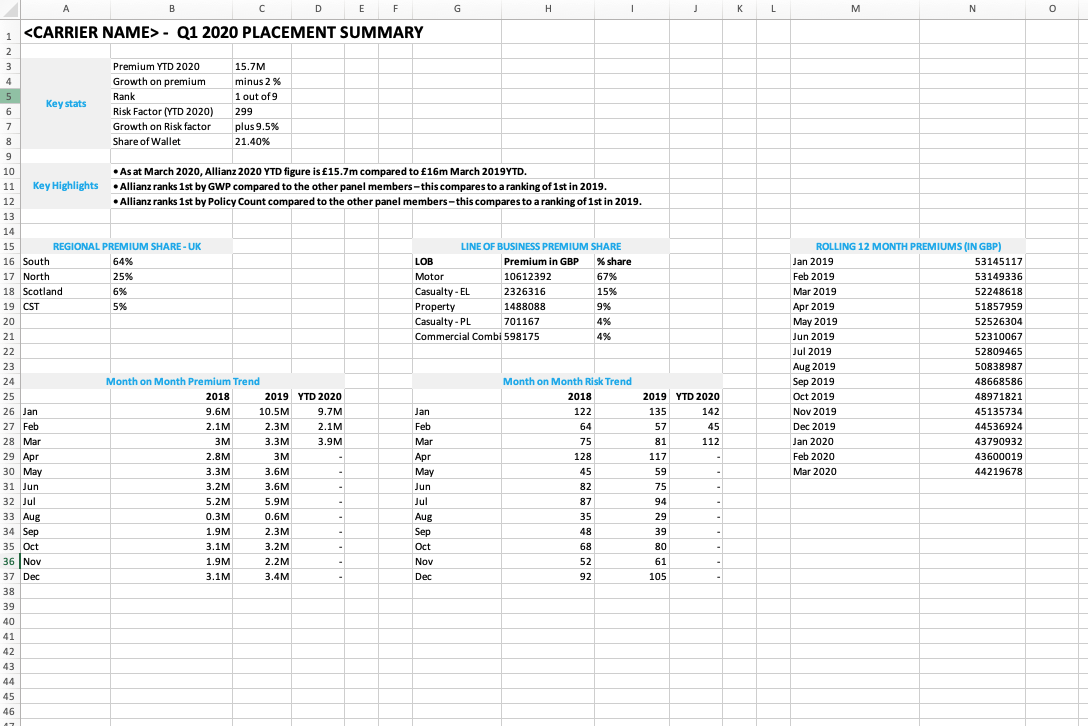
Caption: The starting point: A high-density CSV containing over 15,000 data points across multiple insurance lines.
The objective was to move past “making a chart” and instead build a Strategic Intelligence Tool. I utilized a rigid grid and a prioritized information hierarchy to guide the executive’s eye through three distinct layers of data.
1. The Executive Scorecard (Primary)
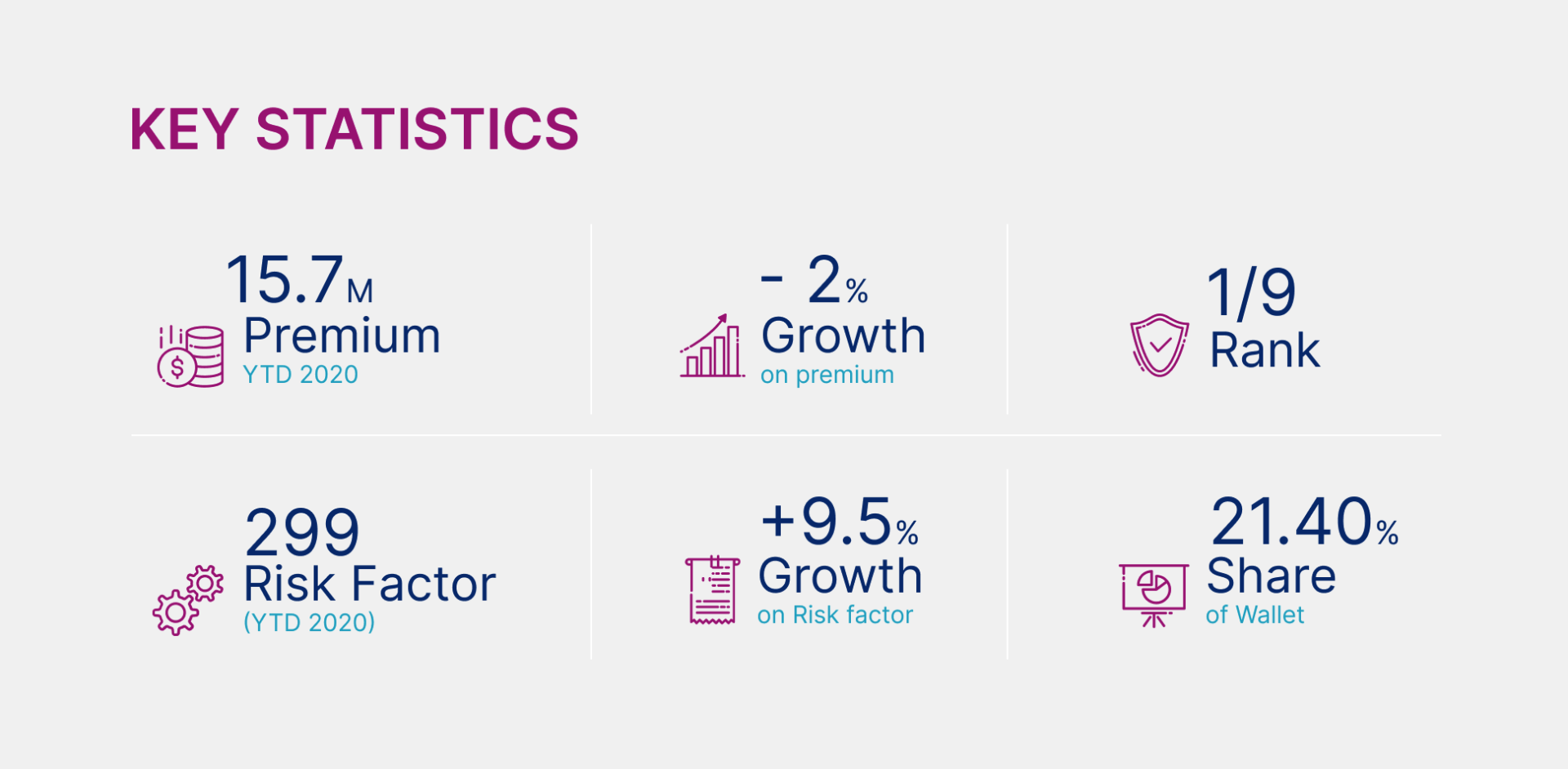
I anchored the layout with a high-contrast KPI strip. This ensures the most vital numbers, Total Premium, Market Rank (1st), and Share of Wallet (21.4%), are the first insights a stakeholder encounters.
2. Multi-Dimensional Analysis (Secondary)
3. Risk Indicators (Tertiary)
By placing Risk Factor Growth (+9.5%) directly alongside a Premium Dip (-2%), the design exposes strategic gaps that might be overlooked in a raw spreadsheet format.
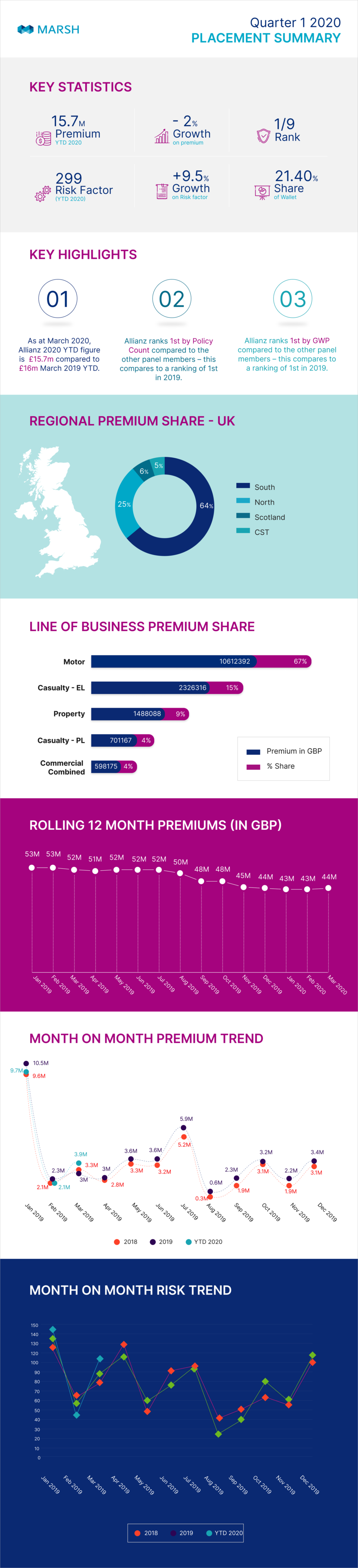
Caption: The final output: A single-page executive summary that balances granular detail with high-level clarity.