
Rulet, poker ve slot çeşitliliği sunan bettilt oldukça ilgi çekici.
Global pazarda da kendini kanıtlayan bettilt platformu Türk oyunculara da hitap ediyor.
KnowMe is a social connection platform designed specifically for people with mental and physical disabilities who face unique barriers to forming meaningful relationships. Through QR code-based discovery, personalized profiles, and inclusive community events, KnowMe creates a safe, accessible environment where users can connect authentically without traditional social friction.
The Challenge
Mental and physical disabilities are increasingly prevalent, with many individuals experiencing profound social isolation that traditional social platforms fail to address. Current solutions lack understanding of disability culture, accessibility requirements, and the specific social dynamics affecting how people with disabilities connect.
Key Statistics
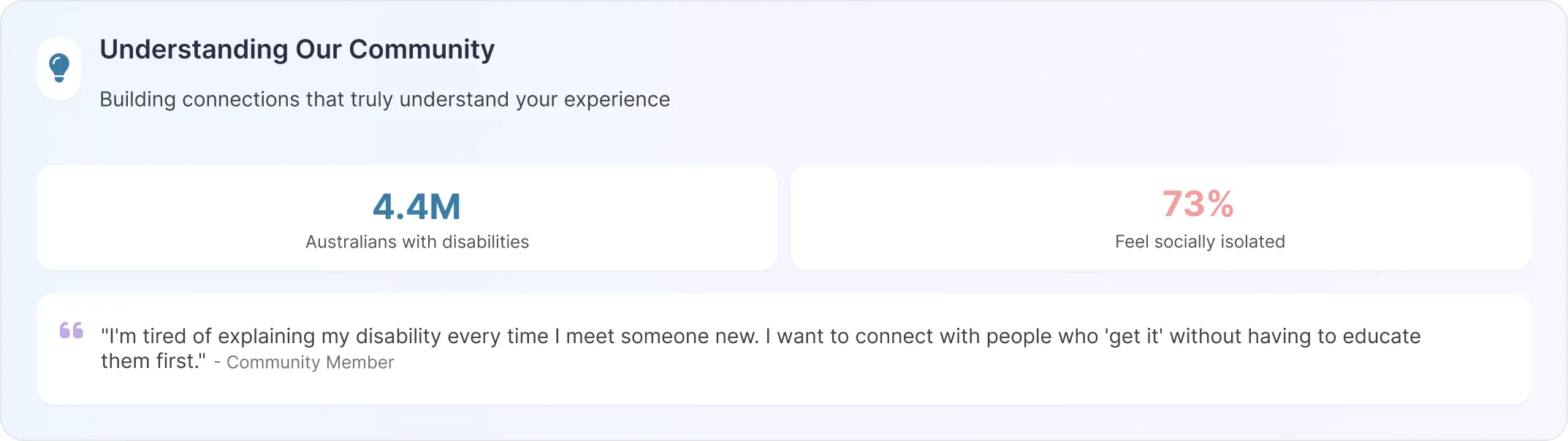
“I’m tired of explaining my disability every time I meet someone new. I want to connect with people who ‘get it’ without having to educate them first.” — Research participant
Research Methodology
Our research employed a participatory design approach, positioning community members as co-creators rather than test subjects.
Phase 1: Exploratory Research (8 weeks)
Phase 2: Participatory Design (6 weeks)
Phase 3: Validation Testing (4 weeks)
User Demographics
Critical Findings
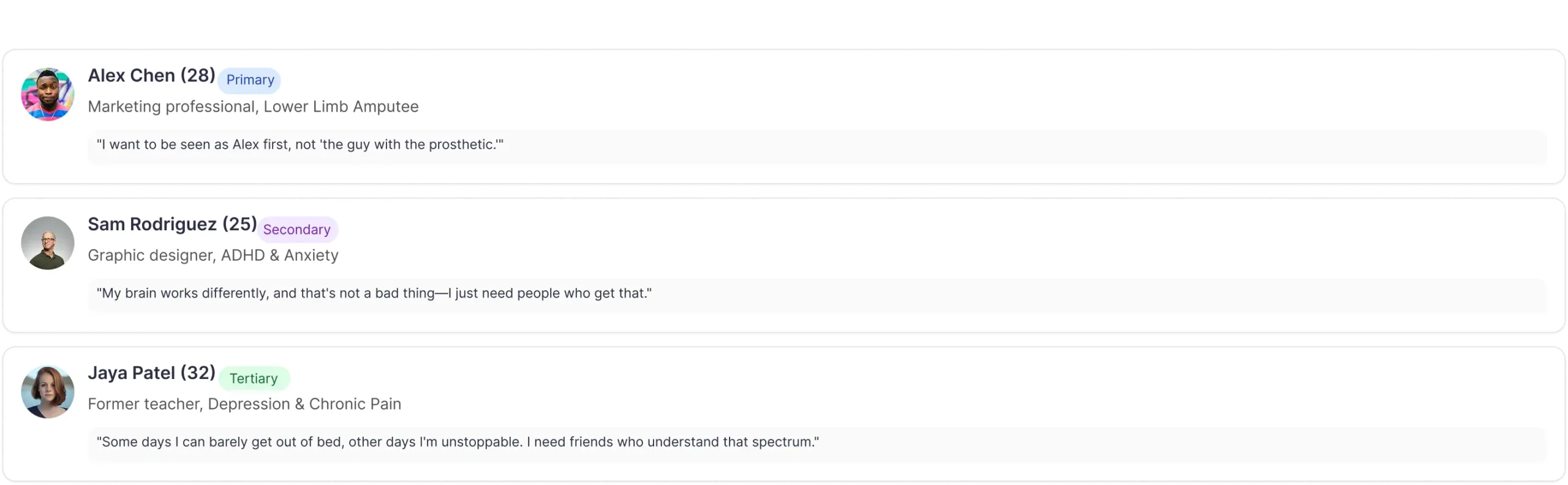
Primary Persona: Alex Chen (28, Lower Limb Amputee)
Background: Marketing professional, prosthetic user since car accident
Goals: Connect without explaining condition, find accessible activities
Quote: “I want to be seen as Alex first, not ‘the guy with the prosthetic.’”
Secondary Persona: Sam Rodriguez (25, ADHD & Anxiety)
Background: Graphic designer, experiences social overstimulation
Goals: Meet understanding creatives, find low-pressure environments
Quote: “My brain works differently, and that’s not a bad thing — I just need people who get that.”
Tertiary Persona: Jaya Patel (32, Depression & Chronic Pain)
Background: Former teacher with fibromyalgia, recently relocated
Goals: Rebuild connections, find invisible disability community
Quote: “Some days I can barely get out of bed, other days I’m unstoppable. I need friends who understand that spectrum.”
QR Code Social Connection
The QR code system emerged from community desire for “no-pressure introductions,” allowing users to share profiles without verbal disclosure or awkward small talk.
Progressive Disclosure Model
Users reveal information at their own pace, starting with minimal shared data and building trust over time through controlled interactions.
Multimodal Interaction Design
Every feature supports multiple input methods (touch, voice, gesture, switch control) ensuring broad accessibility without compromising core functionality.
The app architecture prioritizes cognitive accessibility with clear, predictable navigation patterns and escape routes at every level.
KnowMe App
├── Home Dashboard
│ ├── QR Scanner (Primary Action)
│ ├── Friend Requests
│ ├── Recent Connections
│ └── Upcoming Events
├── My Profile
│ ├── Bio & Photos
│ ├── Disability Labels (Optional)
│ ├── QR Code Display
│ └── Privacy Controls
├── Connections
│ ├── Friends List
│ ├── Chat Messages
│ └── Connection History
├── Events
│ ├── Discover Events
│ ├── Accessibility Filters
│ └── My RSVPs
└── Settings
├── Accessibility Options
├── Privacy Management
└── Account Settings
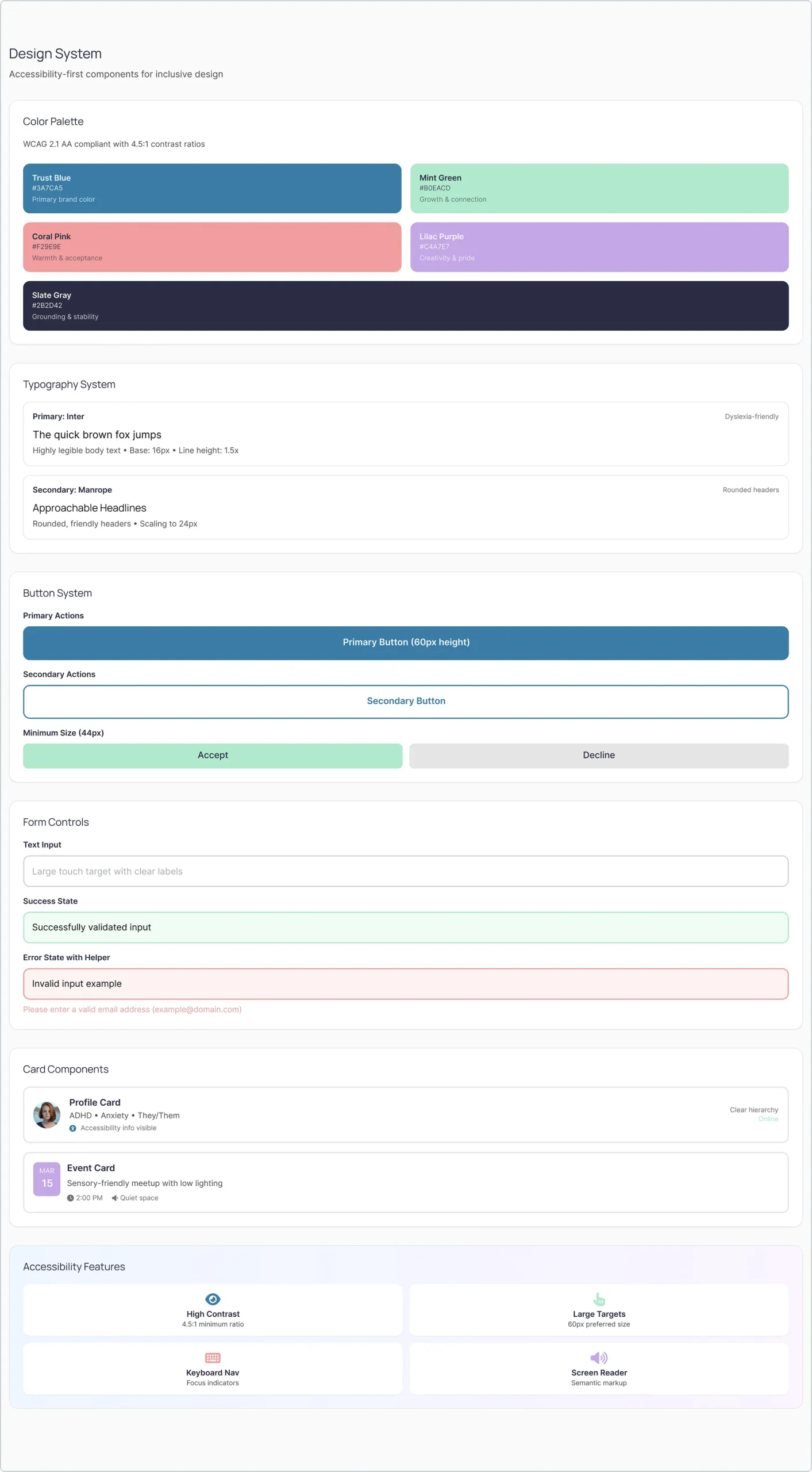
The design system balances accessibility requirements with warm, community-focused aesthetics that avoid medical or clinical associations.
Community-Driven Ideation
We conducted structured ideation sessions directly with community members using adaptive materials and extended timeframes.
Key “How Might We” Questions:
Major Breakthrough: The QR code concept emerged from desire for “no-pressure introductions,” fundamentally shifting our approach from traditional social media patterns to accessibility-first innovation.
Cycle 1: Basic functionality validation
Cycle 2: Streamlined experience
Cycle 3: Accessibility refinements
Each component was developed with accessibility-first approach:
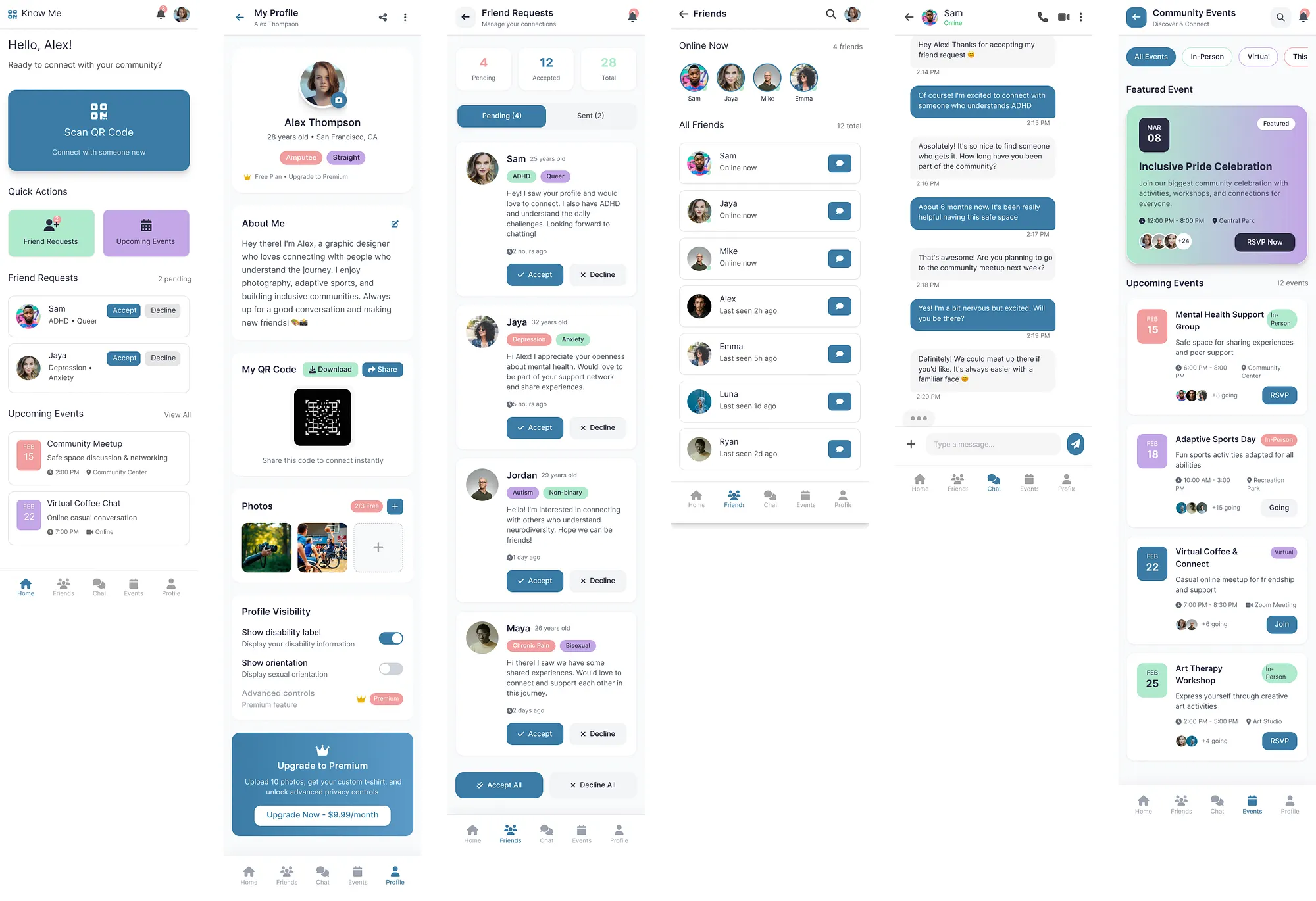
Participants: 24 users including 8 assistive technology users
Results:
Critical Insights:
Beta Testing Program (8 weeks)
150 participants in real-world Melbourne usage
Key Metrics
Qualitative Success Stories
“For the first time, I can just be Alex. My friends know about my prosthetic, but it’s not the first thing we talk about.” — Alex, beta tester
“I never thought I’d be organizing social stuff, but KnowMe made it possible. I can plan events that work for brains like mine.” — Sam, community event organizer
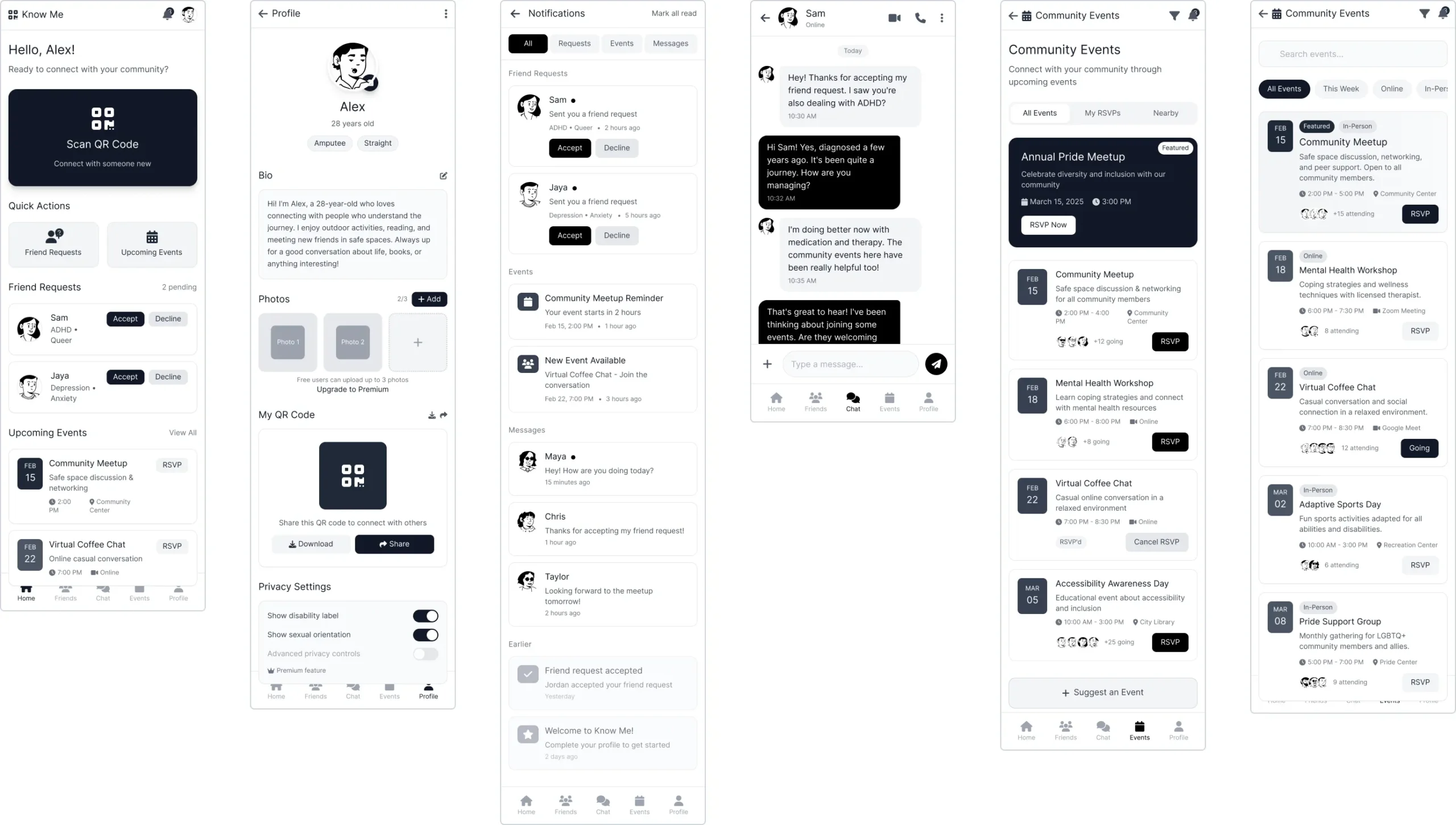
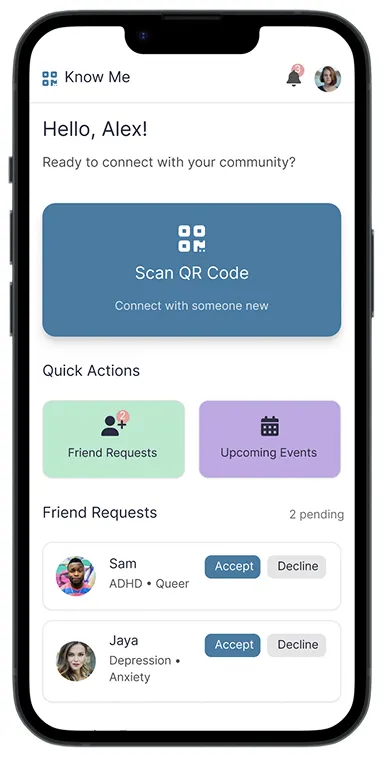
The home screen serves as an accessible command center with clear visual hierarchy and multiple navigation options.
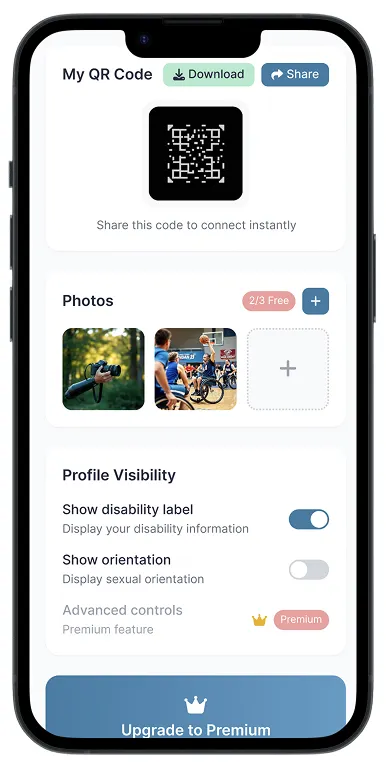
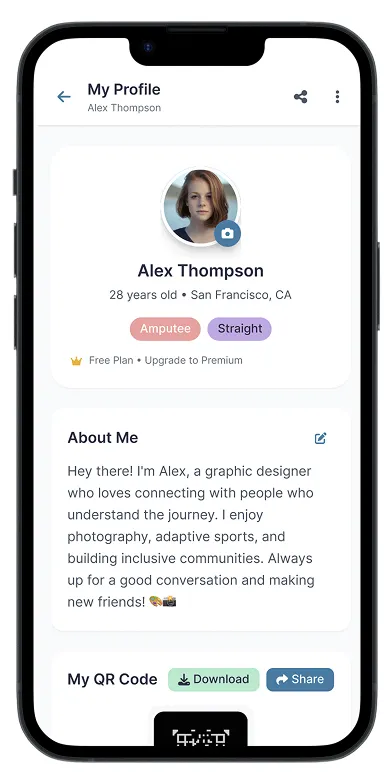
QR Code Innovation
Technical Implementation:

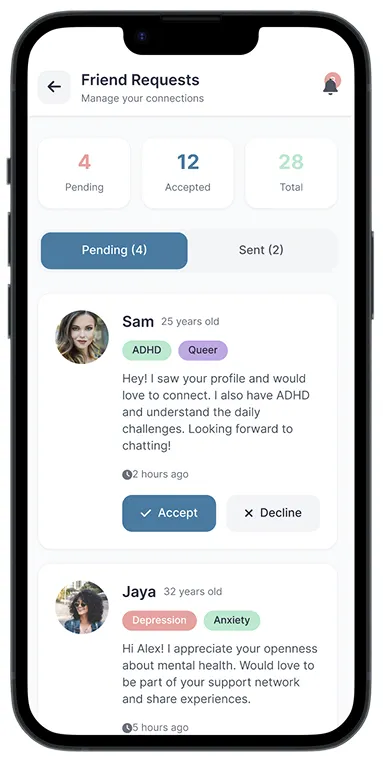
Public Elements (User Controlled):
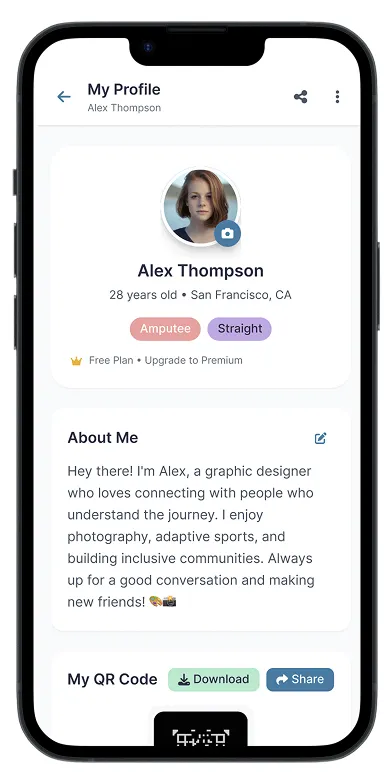
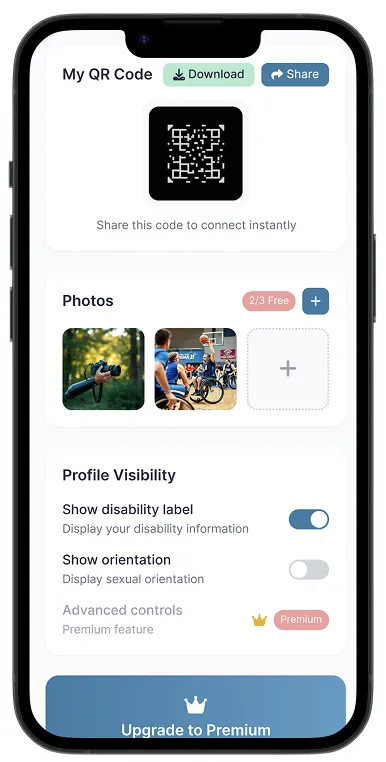
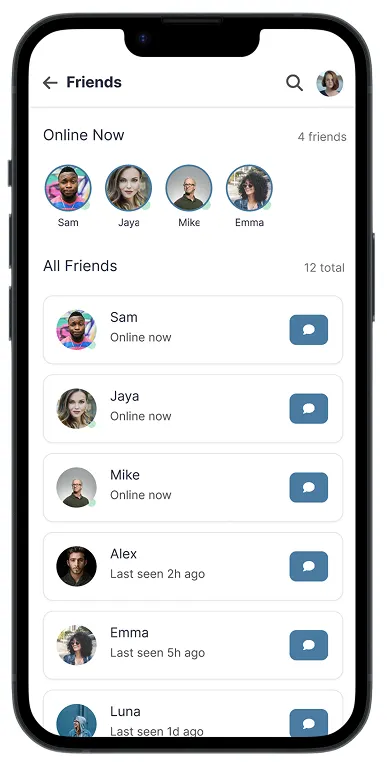
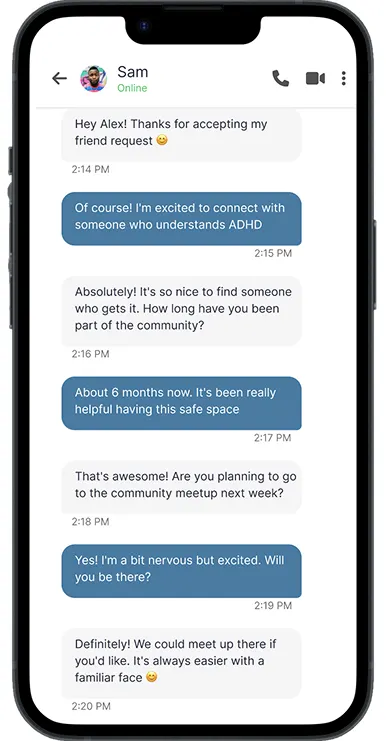
Freemium Model Rationale: All core social features remain free, with premium enhancing control and customization rather than restricting access.

Target Market: Melbourne launch targeting 680,000 people with disabilities
Year 1 Goal: 15,000 active users (5.5% market penetration)
Revenue Model: Freemium with 15% premium conversion target
The most significant learning was that involving the disability community as co-designers rather than test subjects fundamentally changed both the product and my approach to inclusive design. Paying community members for their expertise and creating advisory roles with real decision-making power established trust and authenticity that wouldn’t have been possible through traditional user research.
Designing for the most constrained use cases led to innovations that benefited all users. The QR code social connection, voice-first navigation, and granular privacy controls all emerged from accessibility needs but created better experiences universally. This shifted my perspective from “accessible version of mainstream design” to “mainstream design informed by accessibility needs.”
Traditional social media privacy models fail communities that face discrimination. The disability community taught me that binary privacy settings are insufficient — people need granular control over their narrative, especially when disclosure decisions affect safety and social acceptance.
Lab testing and disability simulations missed critical real-world usage patterns. Extended beta testing in authentic social situations revealed how social anxiety affects feature usage, how group dynamics create new accessibility needs, and how environmental factors impact technical requirements.
The disability community has experienced exploitation by technology companies, requiring extraordinary measures to build and maintain trust. This meant open communication about business models, admitting mistakes quickly, and sharing decision-making processes publicly.
This project fundamentally changed my understanding of inclusive design. I learned that accessibility isn’t about accommodation, it’s about recognizing that disabled ways of being in the world often reveal design solutions that work better for everyone.
The community’s wisdom challenged my assumptions at every stage. Their willingness to share experiences, critique designs, and collaborate on solutions taught me that inclusive design isn’t about following guidelines, it’s about building relationships, sharing power, and recognizing that excluded communities have developed innovations that benefit everyone.
KnowMe’s influence extends beyond its user base to the broader accessibility landscape. The participatory design methodology, community partnership model, and accessibility-first technical architecture provide frameworks for other inclusive design initiatives.
The research findings challenge assumptions about disability identity, social needs, and technology preferences, contributing to academic and industry understanding. The privacy innovations have implications for all social platforms serving communities that face discrimination.
As KnowMe moves toward launch, the real work begins. The community has entrusted us with their stories and hope for better social technology. Our responsibility is maintaining that trust through continued transparency, community partnership, and accessibility innovation.
The future roadmap isn’t just about features or markets, it’s about deepening our understanding of how technology can serve human connection. Every development will be tested against: “Does this help people feel more seen, valued, and connected to others who understand their experience?”
The disability community showed me that when we design for the margins, we create solutions that strengthen the center. When we prioritize needs of the excluded, we build technologies that work better for everyone. When we approach design with humility and partnership rather than assumptions, we create innovations that can change the world.
KnowMe is just the beginning. Real impact will be measured not in metrics but in connections formed, isolation reduced, and community strengthened. In the words of our community advisor: “You’ve given us a tool to find each other. Now we can build the world we want to live in.”
That is the ultimate success metric for any design project worth doing